General Haematology Task Force
The role of cytology, cytochemistry, immunophenotyping and cytogenetic analysis in the diagnosis of haematological neoplasms. General Haematology Task Force of the BCSH.
Abstract
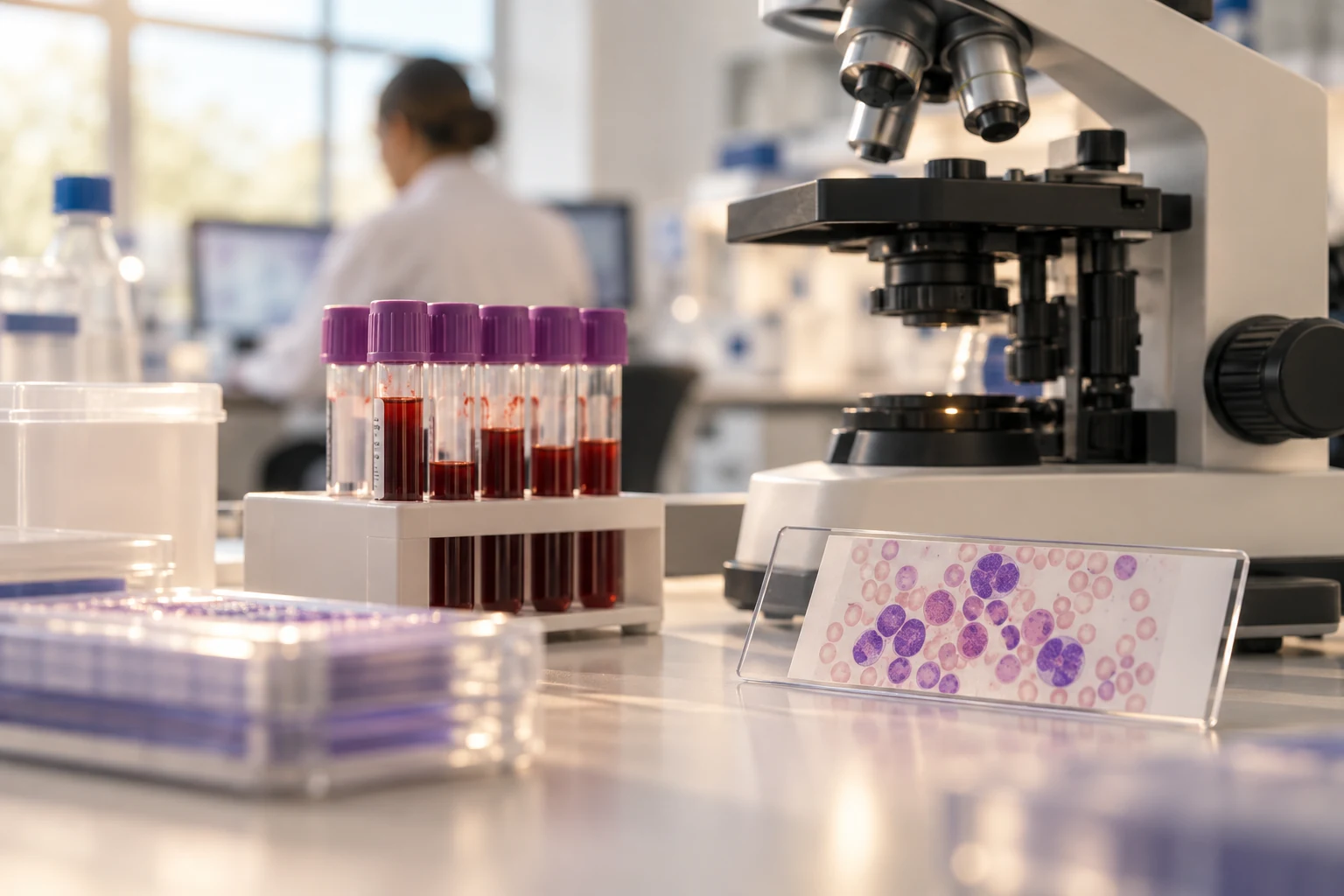
Cytology, cytochemistry, immunophenotyping and cytogenetic analysis have specific roles in the diagnosis and management of various haematological neoplasms. Careful examination of Romanowsky-stained films of blood and bone marrow is fundamental in all haematological diagnosis and, when considered together with clinical and haematological features, indicates which of the more specialized techniques are most likely to be useful. The major role of cytochemistry is in the diagnosis of acute myeloid leukaemia and the myelodysplastic syndromes. The major role of immunophenotyping is in the diagnosis of the chronic lymphoproliferative disorders and of acute leukaemia which is not obviously myeloid. Cytogenetic analysis has a role in confirming the diagnosis of chronic granulocytic leukaemia and gives important supplementary information in the acute leukaemias and the myelodysplastic syndromes.
Source and rights
Published by Clinical and laboratory haematology, 1996. The guideline itself is at the source linked here.
Prognia summarises this guideline for reference and education. It is not medical advice. Always check the official guideline and current local protocols before acting on it.
At a glance
- Organisation
- General Haematology Task Force
- Published
- 1996
- Applies to
- 🇬🇧 United Kingdom
- Scope
- National
- Journal
- Clinical and laboratory haematology
- PubMed
- 9054693
More in haematology
- Perceived relative clinical significance of the risks of venous thromboembolism and bleeding from pharmacologic thromboprophylaxis in children: an international survey of pediatric providers: communication from the ISTH SSC Subcommittee on Pediatric and Neonatal Thrombosis and HemostasisInternational Society on Thrombosis and Haemostasis · 2026
- Evidence-based AGIHO guideline update on prophylaxis of infectious complications with granulocyte-stimulating factors (G-CSF) for the treatment of adult patients with cancerInfectious Diseases Working Party (AGIHO) of the German Society of Hematology and Medical Oncology (DGHO) · 2026