Canadian Dental Hygienists Association
Intraoral radiographs for the diagnosis, treatment, and follow-up of periodontal disease: Position paper from the Canadian Dental Hygienists Association
This guideline holds 3 recommendations, 73 references, 1 table and 5 figures.
Summary
Periodontal diseases affect over 1 billion people worldwide, compromising the tissues that support teeth, with severe disease affecting 24% of Canadians aged 15 and older. Timely and accurate screening and diagnostic tools like intraoral radiographs are crucial for early diagnosis and effective management.
Key takeaways
Intraoral radiographs (periapical and bitewing) offer moderate to high sensitivity (60% to 90%) for periodontal assessment, confirming they are appropriate as an adjunct to clinical evaluation.
Intraoral radiographs tend to underestimate alveolar bone loss by 0.5 mm to 2.8 mm compared to clinical or direct surgical measurements.
Intraoral radiographs are superior to panoramic radiographs for periodontal bone loss assessment, demonstrating less bone loss underestimation (13% vs 24%).
Intraoral radiographs show similar diagnostic accuracy to CBCT for measuring alveolar bone loss, while exposing patients to significantly lower radiation doses and lower costs.
Clinical evaluation and intraoral radiographs are complementary; radiographs provide critical subgingival data (such as calculus, bone defects, furcations, and other pathology) that clinical exams alone may miss.
The paralleling technique is preferred over the bisecting angle technique to minimize image distortion, and vertical bitewings are highly useful when moderate to advanced bone loss is suspected or known.
Recommendations
Recommendations
The findings of this review align with current guidelines, which recommend intraoral radiographs (bitewing [horizontal or vertical] and periapical [paralleling technique]) for the assessment of periodontal disease in all stages. Image prescription, including the image modality, number, type, and location, should be individualized and guided by each patient's medical history, past dental history, signs and symptoms and clinical examination, as well as a review of intraoral radiographs.
Population: Adult patients with known or suspected periodontal diseaseWhen: Periodontal disease
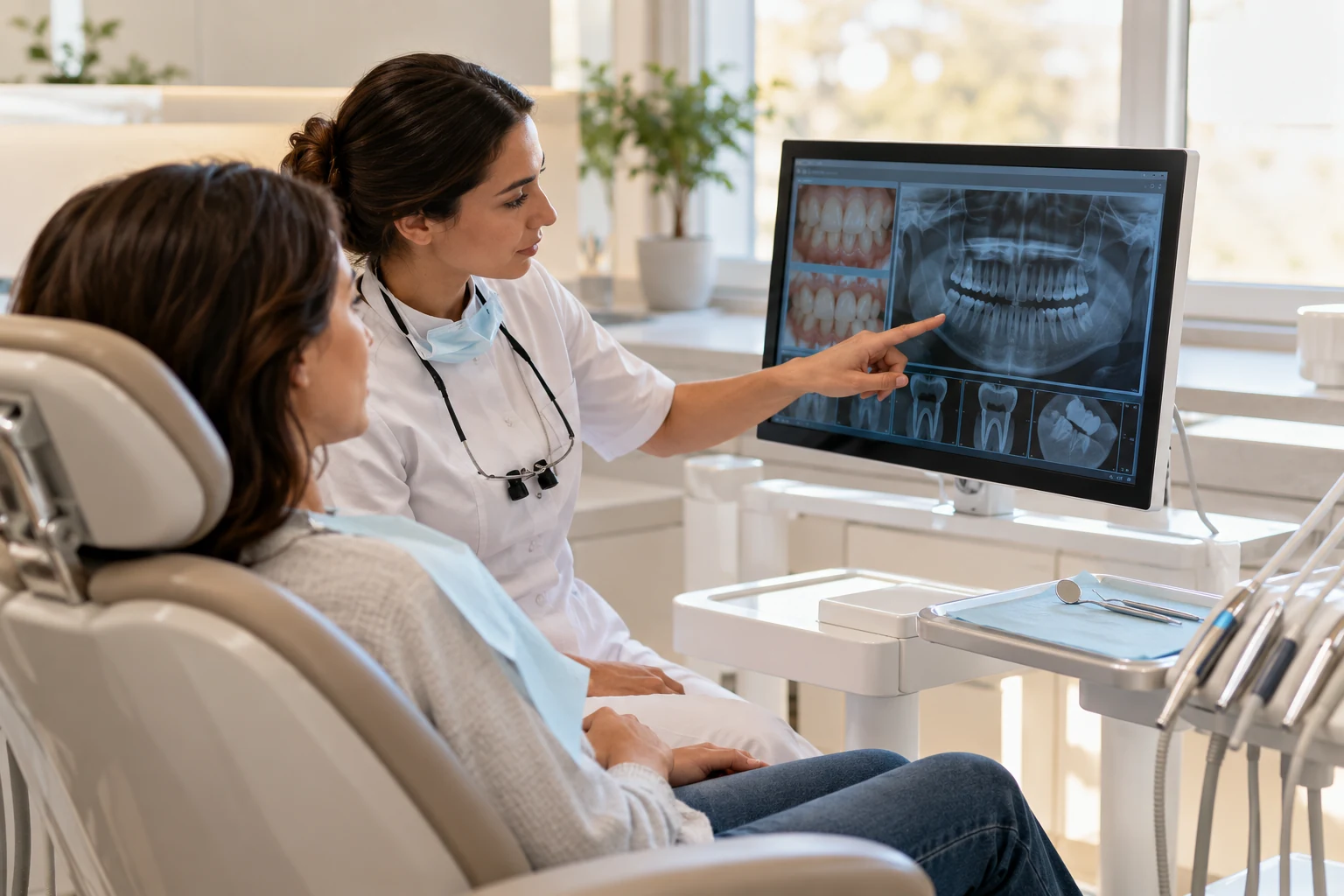
This position paper emphasizes that intraoral radiographs are superior to panoramic radiographs for assessing periodontal disease. As such, extraoral radiographs should not be the primary imaging choice for this purpose.
Population: Adult patients with known or suspected periodontal diseaseWhen: Periodontal disease
Moreover, while intraoral radiographs showed similar results to CBCT, the potential unknown risks of ionizing radiation exposure associated with CBCT compared to intraoral radiographs, as well as CBCT’s higher cost and potential artifacts make CBCT unsuitable for routine periodontal assessment.
Population: Adult patients with known or suspected periodontal diseaseWhen: Periodontal disease