Prognia
All Calculators
NephrologyKDIGONKFUpdated 2024

Estimated Glomerular Filtration Rate — CKD-EPI 2021 Equation

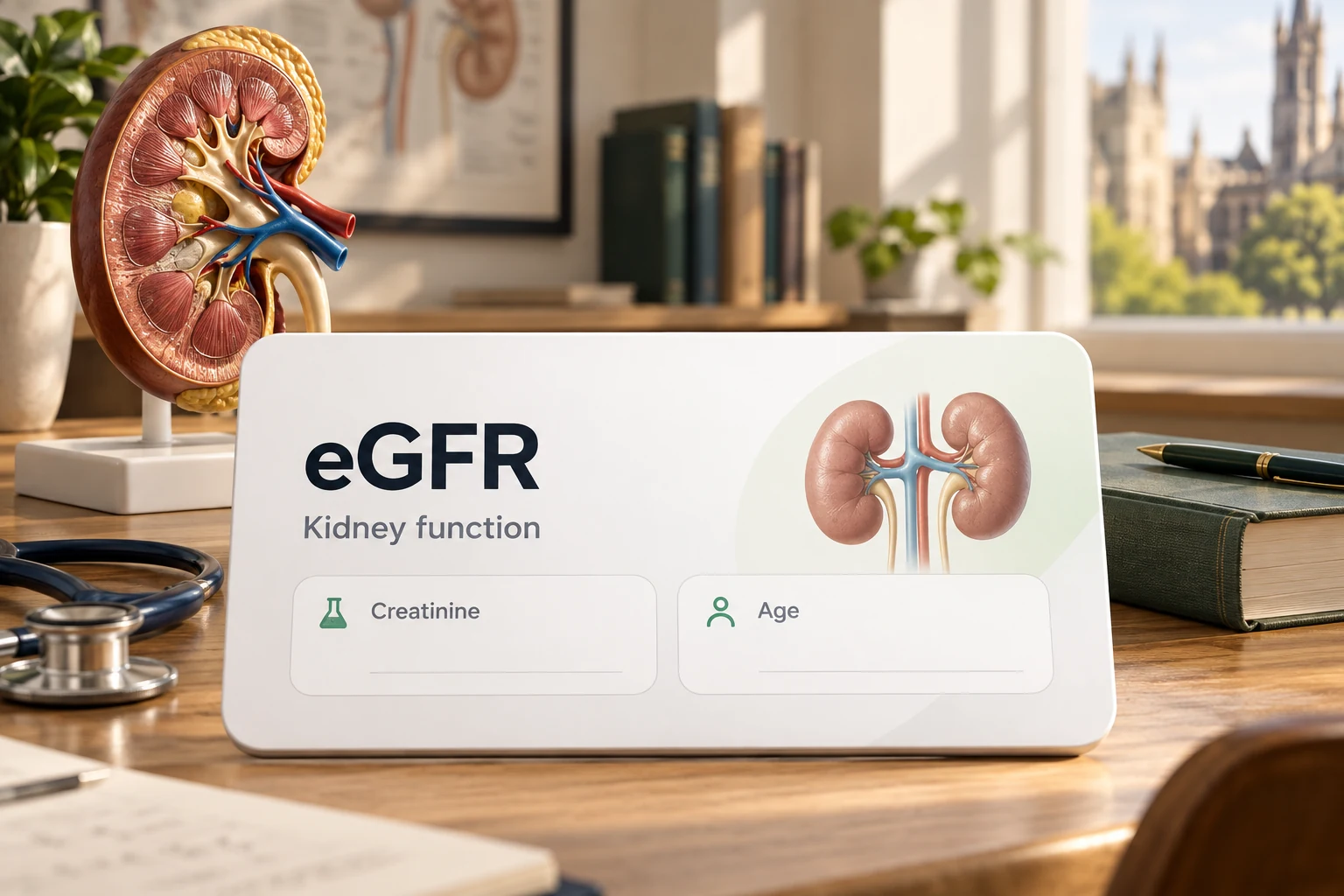
Estimate kidney function using the 2021 CKD-EPI creatinine equation. eGFR is essential for CKD staging, drug dosing, and SGLT2 inhibitor prescribing decisions.

What is the eGFR (CKD-EPI)?

The estimated Glomerular Filtration Rate (eGFR) using the 2021 CKD-EPI (Chronic Kidney Disease Epidemiology Collaboration) creatinine equation is the standard method for assessing kidney function in clinical practice worldwide. The 2021 equation removed race as a variable from the original 2009 CKD-EPI formula to improve equity in CKD staging and organ transplant eligibility. eGFR is the cornerstone of KDIGO CKD staging, guides dosage adjustments for renally cleared drugs (including NOACs, antibiotics, and metformin), and determines eligibility for SGLT2 inhibitors — which are now indicated for CKD regardless of diabetes status per KDIGO 2024 guidelines.

When to use it

Calculate eGFR in all patients with potential CKD, diabetes, hypertension, or heart failure. Essential for drug dosing decisions. Required before initiating or continuing metformin, SGLT2 inhibitors, NOACs, low-molecular-weight heparin, and many nephrotoxic agents.

Scoring Criteria

eGFR (CKD-EPI) — Variables & Points

Serum creatinine (µmol/L or mg/dL)

Primary variable in CKD-EPI equation

Continuous pt

Age (years)

Continuous pt

Sex (male/female)

Categorical pts

(Optional) Serum cystatin C

CKD-EPI creatinine-cystatin C equation provides more accurate estimation

Continuous pt

Score Interpretation

≥ 90 (G1)

Normal or high

CKD only if markers of kidney damage present (proteinuria, haematuria)

60–89 (G2)

Mildly decreased

CKD if kidney damage markers present; monitor annually

45–59 (G3a)

Mildly to moderately dec.

CKD; nephrology referral not yet required; SGLT2i indicated

30–44 (G3b)

Moderately to severely

CKD; nephrology referral; metformin dose review

15–29 (G4)

Severely decreased

Nephrology referral for transplant/dialysis planning

< 15 (G5)

Kidney failure

Renal replacement therapy or conservative management

Guideline Recommendation

KDIGO 2024 CKD Guidelines: Use CKD-EPI 2021 creatinine equation for all eGFR calculations. SGLT2 inhibitors recommended in CKD G2–G4 with uACR ≥200 mg/g (Class I). Metformin generally safe to eGFR ≥30 ml/min/1.73m².

Clinical Pearls

  • eGFR fluctuates — at least two measurements >90 days apart are needed to classify CKD (single low value may be acute).

  • Muscle mass affects creatinine-based eGFR — frail, sarcopenic, or vegan patients may have misleadingly high eGFR; cystatin C-based eGFR is more accurate in these groups.

  • The 2021 CKD-EPI equation (without race) replaced the 2009 equation — ensure your laboratory and clinical systems have adopted it.

  • eGFR <45 is the threshold for many drug dose adjustments — review all renally cleared drugs at this threshold.

  • Proteinuria (uACR) combined with eGFR provides better risk stratification than eGFR alone — the KDIGO heat map plots both axes.

Limitations

  • Creatinine-based eGFR is influenced by muscle mass, dietary protein, and tubular secretion of creatinine.

  • Less accurate at high eGFR values (>90 ml/min/1.73m²) where absolute GFR may differ significantly from estimated values.

  • Not validated for use during acute kidney injury — use absolute creatinine trends instead.

Interactive Calculator

Serum creatinine (µmol/L or mg/dL)
Age (years)
Sex (male/female)
(Optional) Serum cystatin C
Calculate Score

Interactive calculator requires a free account

Create a free Prognia account to use the eGFR (CKD-EPI) calculator — including auto-scored results, interpretation, and CPD logging.

Free plan · No credit card · Instant access

Frequently Asked Questions

What is a normal eGFR level?

An eGFR ≥90 mL/min/1.73m² is considered normal kidney function (KDIGO G1 stage). Values of 60–89 represent mildly decreased function (G2). CKD is defined as eGFR <60 mL/min/1.73m² or evidence of kidney damage (such as proteinuria or haematuria) persisting for >3 months. A single low value may reflect acute injury rather than CKD.

When should I refer to nephrology based on eGFR?

KDIGO recommends nephrology referral for eGFR <30 mL/min/1.73m² (G4–G5), or for eGFR 30–44 (G3b) with a rapid rate of decline, significant proteinuria, or difficult-to-manage complications. Earlier referral (eGFR 45–59) is warranted if there are concerns about underlying cause or trajectory.

What is the difference between 2021 and 2009 CKD-EPI equations?

The 2021 CKD-EPI equation removed race as a variable. The original 2009 equation included a race coefficient that assigned Black patients a higher eGFR, which was found to perpetuate healthcare inequities. KDIGO 2024 and NKF recommend universal adoption of the 2021 equation.