World Society of Emergency Surgery
Management of internal bleeding : Guidelines of the American Association for the Surgery of Trauma (AAST) and World Society of Emergency Surgery (WSES)
Abstract
Internal bleeding is a common and serious complication in trauma patients. The American Association for the Surgery of Trauma (AAST) and the World Society of Emergency Surgery (WSES) have developed comprehensive guidelines to standardize and optimize the care of these patients. In Germany, abdominal injuries are involved in around 20% of all polytraumas, often caused by falls or road traffic accidents. The liver and spleen are most frequently affected. Correct diagnosis and timely management are crucial for patient survival.
Computed tomography (CT) is gold standard to assess organ injuries, while ultrasound (fokussiertes Assessment mit Sonographie für Trauma, FAST) provides a readily available, non-invasive diagnostic tool. Magnetic resonance imaging (MRI) is used for detailed soft tissue injuries. The AAST has developed a scoring system (Organ Injury Scale, OIS) to classify the severity of organ injuries. The WSES classifies the hemodynamic condition of the patient.
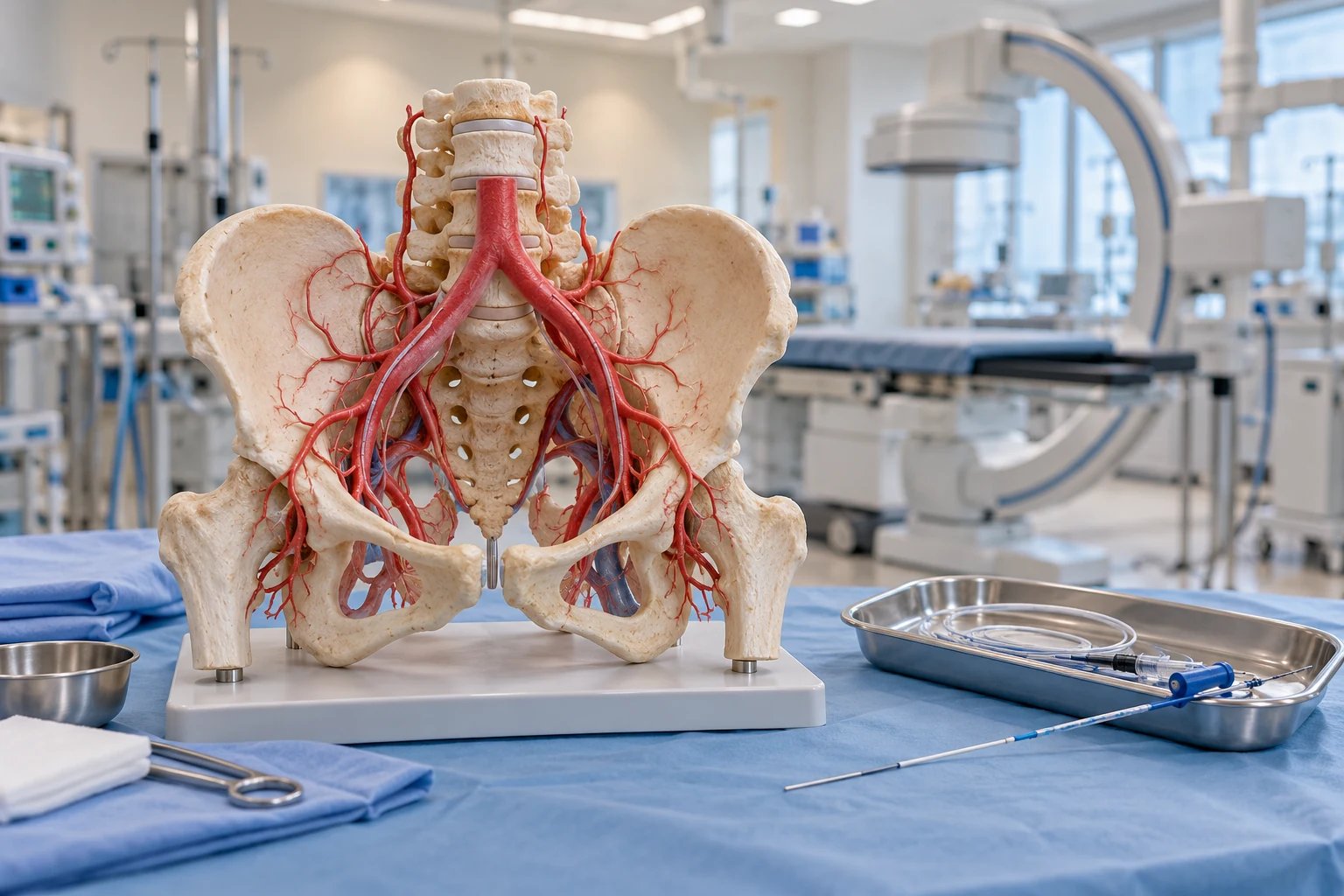
Spleen: Treatment decisions are based on hemodynamic stability. Unstable patients often require emergency surgery, while stable patients can be treated conservatively. In the presence of active bleeding, embolization is a treatment option. Liver: Stable patients with a positive blush (leakage of contrast medium) are treated angiographically. Unstable patients should undergo surgery with perihepatic packing and Pringle maneuver. Kidney: Conservative treatment for stable patients. Embolization is used for active bleeding. Unstable patients require surgical treatment. Gastrointestinal tract: Duodenal hematomas can be treated conservatively. Pancreatic injuries require conservative or surgical intervention depending on the severity and stability of the patient.
These guidelines aim to improve the survival and outcome of trauma patients with internal bleeding.
HINTERGRUND: Organblutungen sind eine häufige und schwerwiegende Komplikation bei Traumapatienten. Die American Association for the Surgery of Trauma (AAST) und die World Society of Emergency Surgery (WSES) haben umfassende Leitlinien entwickelt, um die Versorgung dieser Patienten zu standardisieren und zu optimieren. In Deutschland sind Abdominalverletzungen an etwa 20 % aller Polytraumata beteiligt, oft durch Stürze oder Verkehrsunfälle verursacht. Die Leber und die Milz sind am häufigsten betroffen. Die richtige Diagnostik und das zeitgerechte Management sind entscheidend für das Überleben der Patienten.
Die Computertomographie (CT) ist der Goldstandard zur Evaluation von Organverletzungen, während Ultraschall (FAST-Sonographie, Focused Assessment with Sonography for Trauma) eine schnell verfügbare, nichtinvasive Diagnostik ermöglicht. Die Magnetresonanztomographie (MRT) wird für detaillierte Weichteilverletzungen eingesetzt. Die AAST hat ein Scoringsystem entwickelt (Organ Injury Scale, OIS), um die Schwere von Organverletzungen zu klassifizieren. Die WSES klassifiziert den Patienten in seinen hämodynamischen Zustand.
More in emergency medicine
- ESR Essentials: Trauma Team and the Role of Interventional RadiologyCardiovascular and Interventional Radiological Society of Europe (CIRSE) · 2026
- Guidelines for Essential Trauma Care: Second Edition (2026)International Association for Trauma Surgery and Intensive Care (IATSIC) and the World Health Organization (WHO) · 2026