The British journal of dermatology
Management of congenital ichthyoses: guidelines of care: Part two: 2024 update
Abstract
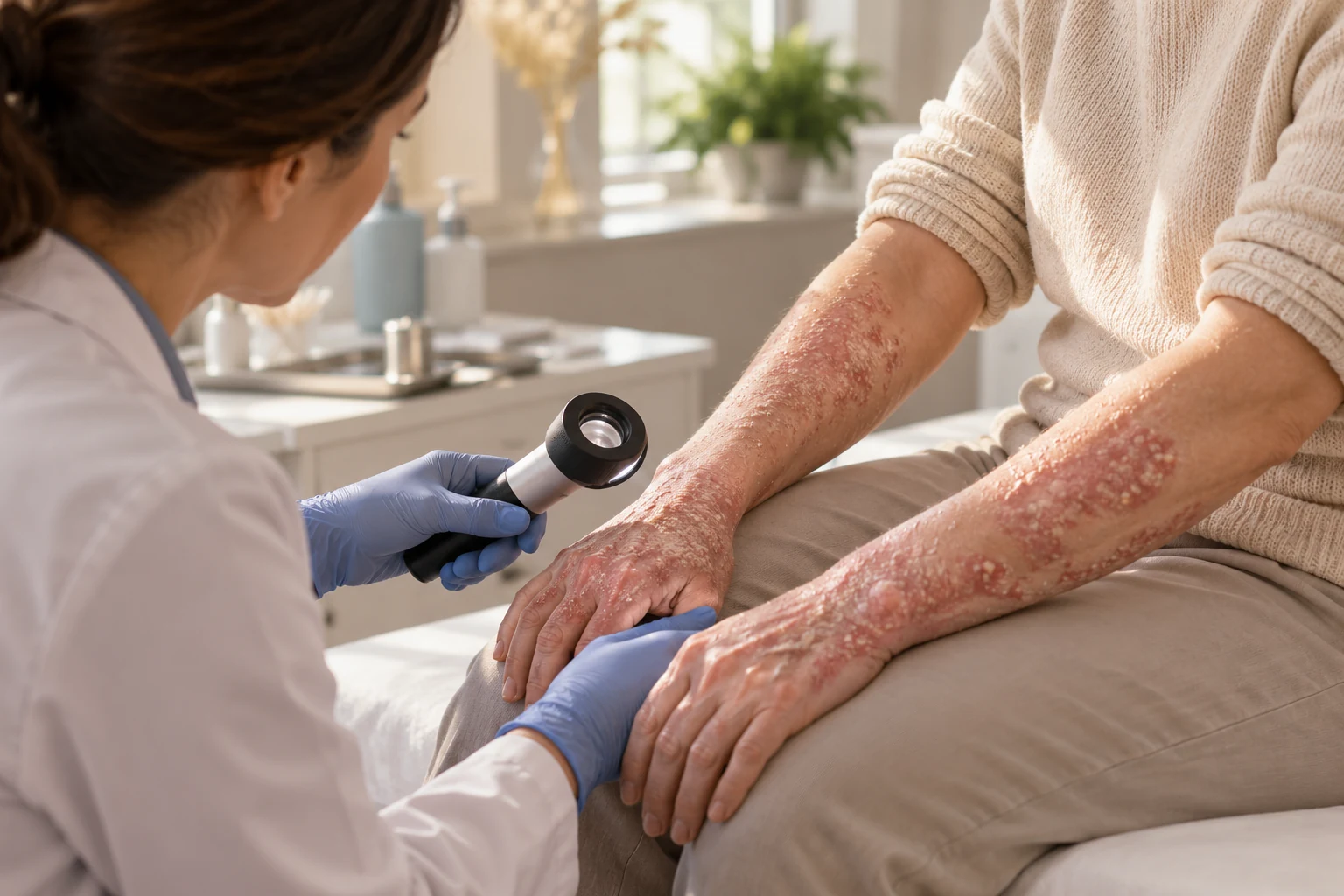
In 2019, a group of experts published the first European guidelines for the management of congenital ichthyoses after a multidisciplinary expert meeting held in 2016. An update of these guidelines and literature search was planned every 5 years, given the clinical, molecular and therapeutic advances, including the use of biologic therapies. We present here updated guidelines that have been developed by a reorganized multidisciplinary group of international experts after a systematic review of recent literature, discussions and consensus reached at an expert conference held in June 2023. The guidelines provide summarized evidence and expert-based recommendations that aim to guide clinicians in the management of these rare and often complex diseases. These guidelines consist of two sections. Part one is reported elsewhere. Here, Part two covers the management of complications (eye, ear-nose-throat, pruritus, pain, cutaneous infections, vaccinations, growth failure and nutritional deficiency, hair and nail anomalies, reaction to hot and cold climates, physical limitations, comorbidities) and the particularities of the neonatal period and Netherton syndrome.
Congenital ichthyoses (pronounced ‘ik-thee-oh-sis’) are a rare group of genetic skin disorders. In 2019, a group of experts published guidelines on how to treat these disorders. The guidelines are updated every 5 years to include treatment advances and new findings. The latest update was prepared in 2023 by a team of international experts. The updated guidelines are published in two parts. This paper covers the second part of the update. Part one is published separately. In Part two, we make recommendations for how to manage complications in these rare skin disorders. Complications can include issues with the eyes, ears, nose, throat, itching, pain, skin infections, growth, nutrition, hair, nails, climate sensitivity, physical limitations and other health problems. Part two also covers special considerations for newborn babies. We also discuss how to treat a rare subtype called Netherton syndrome.
Source and rights
Published by The British journal of dermatology, 2025. The guideline itself is at the source linked here.
More in dermatology
- Joint position statement from the National Psoriasis Foundation Medical Board and the International Psoriasis Council on routine testing for latent tuberculosis infection prior to and during treatment of psoriasis patients with interleukin 17 or interleukin 23 inhibitorsNational Psoriasis Foundation Medical Board and the International Psoriasis Council · 2026
- Generalized Pustular Psoriasis: Review and Consensus of the Psoriasis Group of the Spanish Academy of Dermatology and VenereologySpanish Academy of Dermatology and Venereology · 2026