ProgniaPrognia
Back to Guidelines
American Venous Forum and the American Venous and Lymphatic SocietyVascular Surgery2026intermediate

Non-pneumatic compression and its clinical utility in management of lymphedema. A position statement endorsed by the American Venous Forum and the American Venous and Lymphatic Society.

Published by American Venous Forum and American Venous and Lymphatic Society

26References

Summary

AI-generated

This position statement, endorsed by the American Venous Forum (AVF) and the American Venous and Lymphatic Society (AVLS), assesses the clinical utility of non-pneumatic compression devices (NPCDs) in managing lymphedema and phlebolymphedema. NPCDs use shape-memory alloys (nitinol) to deliver programmable sequential gradient compression while enabling patient mobility. The statement reviews clinical evidence, including two randomized controlled trials (NILE and TEAYS) which show NPCD's superiority over advanced pneumatic compression devices (PCDs) regarding volume reduction, quality of life, and treatment adherence.

LymphedemaPhlebolymphedemaCompression TherapyNon-pneumatic compression devicesNPCDsAmerican Venous ForumAmerican Venous and Lymphatic SocietyAVF

Key Takeaways

  • 1
    Lymphedema is an underdiagnosed and undertreated chronic condition, with phlebolymphedema being a major subtype representing 41.8% of lower extremity cases.
  • 2
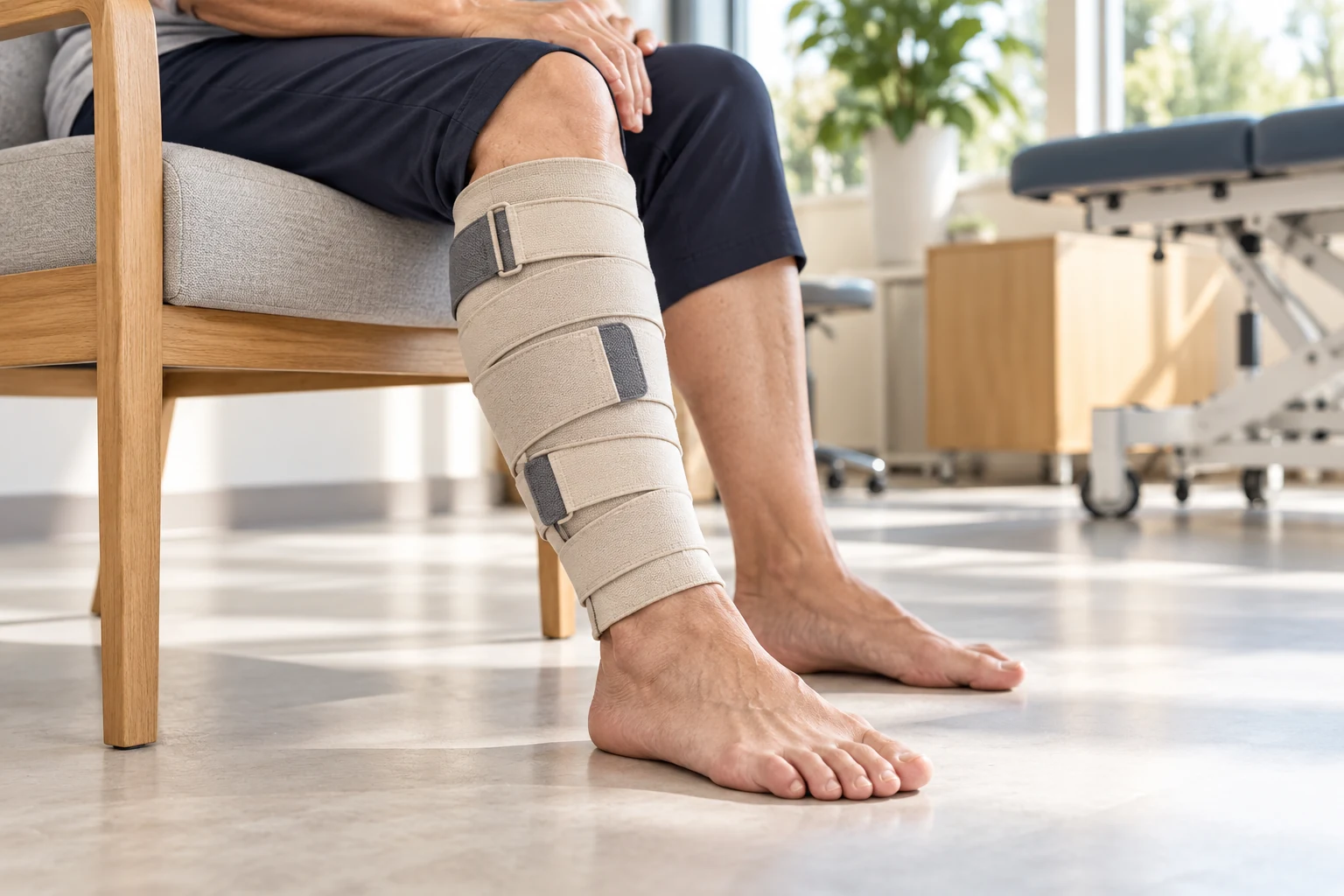
    NPCD offers a multi-modal alternative to PCDs by combining static compression, gradient sequential compression (0-100 mmHg), and muscle pump activation by enabling patient mobility.
  • 3
    In two multi-center RCTs (NILE and TEAYS), NPCD demonstrated superior results over advanced PCDs, including higher volume reduction, better quality of life (LYMQOL), and higher patient-reported adherence.
  • 4
    NPCD has active HCPCS billing codes (E0680, E0678, E0679, E0682) established by CMS, recognizing its therapeutically distinct mechanism of action.

Key Recommendations

NON-PNEUMATIC COMPRESSION TREATMENT

  • REC-1

    Treating chronic venous insufficiency (CVI) (CEAP C3-C6) as lymphedema to improve management outcomes.

    RecommendedTreatment

CONCLUSIONS

  • REC-2

    Non-pneumatic compression (NPCD) should be considered after conservative treatment failure and included in future guideline assessments.

    Treatment

Scope & Objectives

Clinical Topic

Lymphedema and phlebolymphedema management using non-pneumatic compression devices (NPCDs)

Objectives

To review and evaluate the clinical evidence, design, mechanisms of action, and clinical utility of non-pneumatic compression devices (NPCDs) in the management of lymphedema and phlebolymphedema.

Target Patient Population

Patients with lymphedema, phlebolymphedema, chronic venous insufficiency (CVI), lipedema, or chronic edema-related conditions.

Target Providers

Vascular surgeonsLymphatic specialistsPhlebologistsPhysiciansPhysical therapists

Patient Criteria & Setting

Therapeutic Area

Vascular and Lymphatic Diseases

Guideline Scope

TreatmentTechnology Assessment

Inclusion Criteria

  • Lymphedema
  • Phlebolymphedema
  • Venous insufficiency
  • Lipedema
  • Chronic edema-related conditions

Exclusion Criteria

  • Active cellulitis
  • Skin ulceration
  • Impaired ambulation capability

Care Settings

ClinicHome

Special Populations

Older adults (65 or greater)Device-naïve patients

Safety & Contraindications

Contraindications

  • Active cellulitis
  • Skin ulceration

Monitoring Guidance

Monitor for localized skin irritation and patient compliance; evaluate benefit in patients with impaired ambulation.

Authors & Contributors

Glenn R. JacobowitzRuth BushRonald S. WinokurJoseph D. Raffetto

Guideline Features

Multidisciplinary

Learning Context

Difficulty

intermediate

Learning Paths

Vascular MedicineLymphatic DiseaseLymphedema ManagementCompression TherapyMedical Devices