
Loading your page…
Loading your page…
Published by German Society
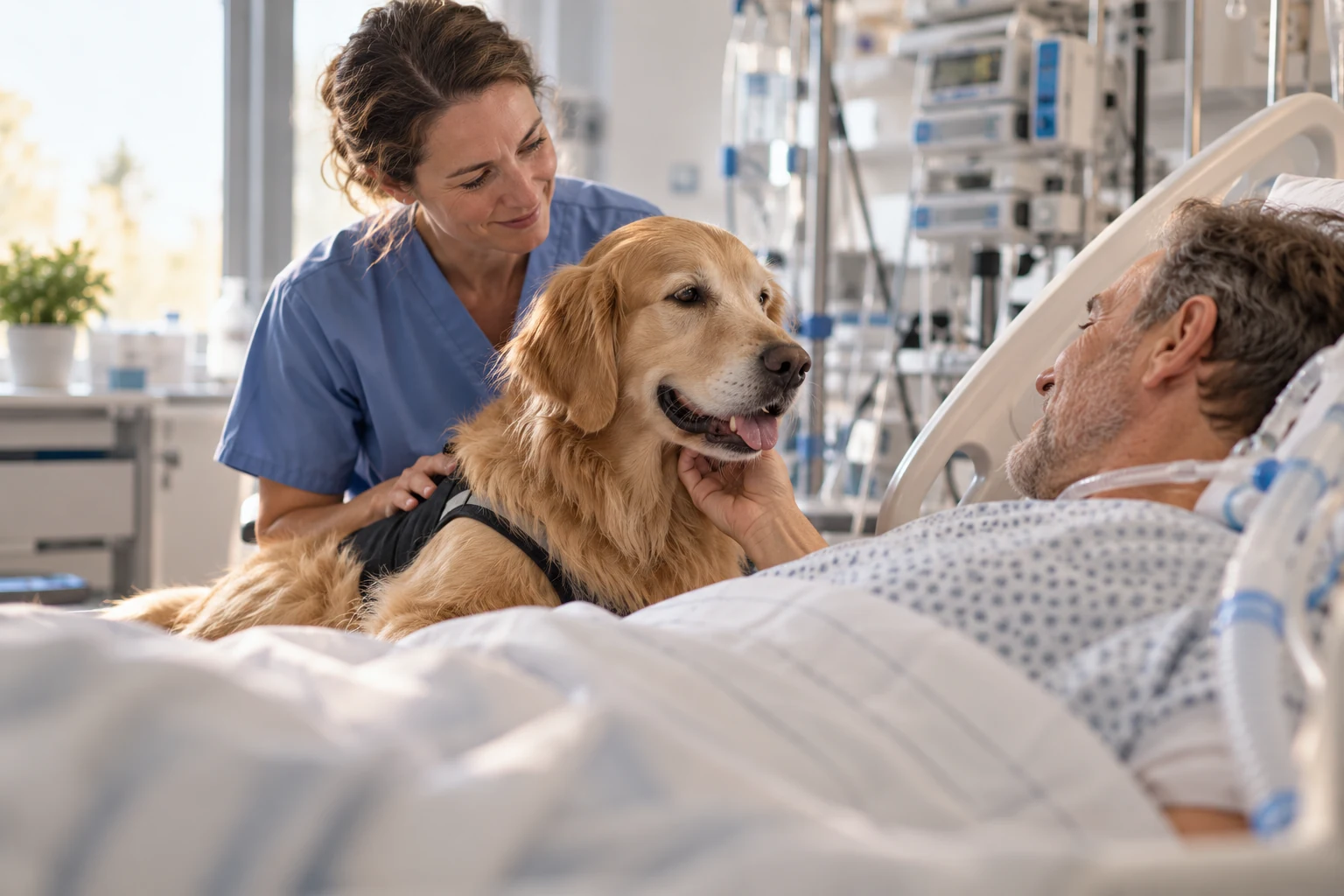
Animal-assisted interventions (AAI) are increasingly recognized as nonpharmacological adjuncts to intensive care medicine. The aim of this paper by the German Society of Internal Intensive Care and Emergency Medicine (DGIIN) is to summarize the scientific rationale, safety considerations, and implementation recommendations for the use of AAI in intensive care units. Therapeutic effects are attributed to neuroendocrine mechanisms, particularly activation of the oxytocin system and reduction of cortisol levels, which can alleviate anxiety, pain perception, and psychological stress in critically ill patients. Early studies have reported significant reductions in anxiety without an associated increase in nosocomial infections. However, clinical implementation requires well-defined structural, hygienic, and ethical frameworks, including standardized risk analyses, binding hygiene and animal welfare standards, and multiprofessional collaboration integrating intensive care, nursing, infection control, and animal therapy. This paper presents the first systematic recommendations in Germany for the safe and quality-assured integration of animal-assisted interventions into intensive care practice and calls for scientifically accompanied implementation focusing on patient safety, animal welfare, and team well-being. Tiergestützte Interventionen (TGI) stellen zunehmend anerkannte, nichtpharmakologische Ergänzungen der intensivmedizinischen Versorgung dar. Ziel dieser Stellungnahme der Deutschen Gesellschaft für Internistische Intensivmedizin und Notfallmedizin (DGIIN) ist die Darstellung wissenschaftlicher Grundlagen, Sicherheitsaspekte und Implementierungsempfehlungen für den Einsatz von TGI auf Intensivstationen. Therapeutische Effekte beruhen auf neuroendokrinen Mechanismen, insbesondere der Aktivierung des Oxytocinsystems und Reduktion des Kortisolspiegels, wodurch Angst, Schmerzempfinden und psychischer Stress bei kritisch Kranken reduziert werden können. Erste Studien zeigen signifikante Angstreduktionen ohne nachweisbare Zunahme nosokomialer Infektionen. Für den klinischen Einsatz sind jedoch klare strukturelle, hygienische und ethische Rahmenbedingungen erforderlich. Dazu gehören standardisierte Risikoanalysen, verbindliche Hygiene- und Tierwohlstandards sowie eine multiprofessionelle Zusammenarbeit unter Einbindung von Intensivmedizin, Pflege, Hygiene und Tiertherapie. Die Stellungnahme formuliert erstmals in Deutschland systematische Empfehlungen zur sicheren und qualitätsgesicherten Integration tiergestützter Interventionen in die Intensivmedizin und fordert eine wissenschaftlich begleitete Implementierung mit Fokus auf Patient*innensicherheit, Tierwohl und Teamgesundheit.