American Society of Echocardiography
Use of Multimodality Cardiovascular Imaging in Young Adult Competitive Athletes
This guideline holds 31 recommendations, 170 references, 4 tables and 13 figures.
Summary
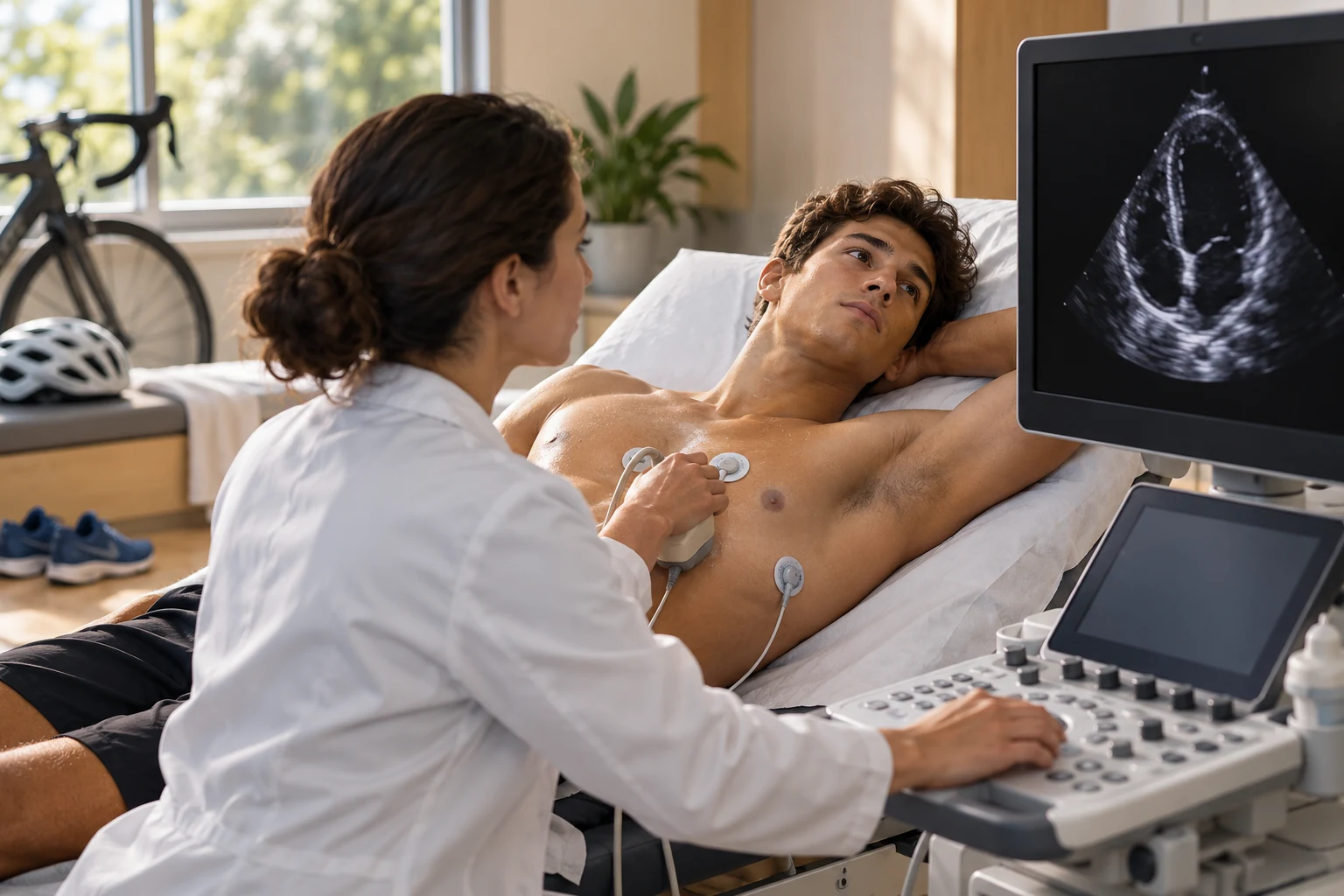
This guideline provides a comprehensive framework for using multimodality cardiovascular imaging (TTE, CMR, CTA) to evaluate competitive athletes. It outlines how to differentiate physiological exercise-induced cardiac remodeling from pathologic cardiomyopathies and details the appropriate clinical scenarios for incorporating diagnostic imaging following pre-participation screening or symptom presentation.
Habitual vigorous exercise stimulates structural and functional cardiac remodeling, creating overlapping features between normal adaptation and underlying cardiovascular disease. Accurately distinguishing physiological changes from pathology using cardiovascular imaging is crucial for preventing sudden cardiac death and guiding clinical care.
Key takeaways
Multimodality imaging (TTE, CMR, CTA) plays a fundamental role in evaluating competitive athletes to differentiate physiologic exercise-induced cardiac remodeling (EICR) from underlying cardiovascular disease.
Transthoracic echocardiography (TTE) is the accessible, cost-effective, first-line imaging modality for evaluating competitive athletes presenting with symptoms or abnormal screening findings.
Cardiac magnetic resonance (CMR) is the preferred second-line modality for clarifying ambiguous TTE findings, providing detailed characterization of right ventricular morphology, apical hypertrabeculation, and myocardial tissue composition (fibrosis/edema).
Routine use of noninvasive imaging is not recommended as a universal first-line screening tool during pre-participation cardiovascular screening (PPCS) in asymptomatic athletes.
EICR differs based on the physiologic demands of the sport (isotonic vs. isometric), sex, ethnicity, and genetic factors, and clinicians must integrate these variables to interpret structural measurements accurately.
Recommendations
More in cardiology
- Multimodality Assessment of Congenital Coronary AnomaliesAmerican Society of Echocardiography · 2020
- ESC guidelines on dyslipidemia update 2025 : New recommendations for the practiceEuropean Society of Cardiology · 2026
- HRS position statement: Changing the tide in CPR and AED education for students in the United States