
Loading your page…
Loading your page…
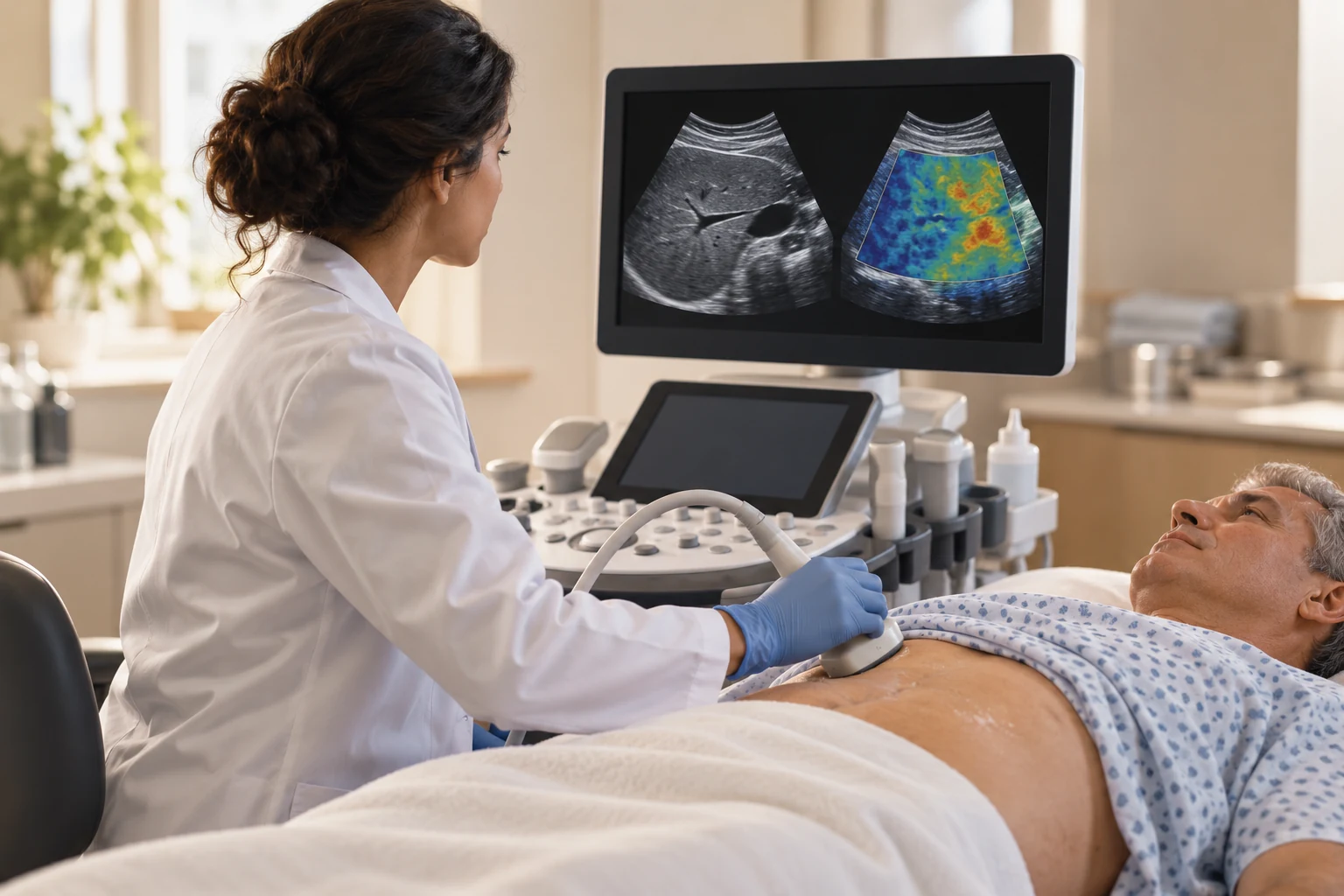
Published by American Gastroenterological Association Institute · GRADE
This guideline provides evidence-based recommendations on utilizing noninvasive imaging tools, specifically vibration-controlled transient elastography (VCTE) and magnetic resonance elastography (MRE), for evaluating liver fibrosis, diagnosing cirrhosis, and ruling out varices across various chronic liver diseases.
Key Takeaways
In patients with chronic hepatitis C, the AGA recommends VCTE, if available, rather than other nonproprietary, noninvasive serum tests (APRI, FIB-4) to detect cirrhosis.
In patients with chronic hepatitis C, the AGA suggests a VCTE cutoff of 12.5 kPa to detect cirrhosis.
In noncirrhotic patients with HCV who have achieved SVR after antiviral therapy, the AGA suggests a post-treatment vibration controlled transient elastography cutoff of 9.5 kPa to rule out advanced liver fibrosis.
In patients with chronic hepatitis B, the AGA suggests VCTE rather than other nonproprietary noninvasive serum tests (ie, APRI and FIB-4) to detect cirrhosis.
In patients with chronic hepatitis B, the AGA suggests a VCTE cutoff of 11.0 kPa to detect cirrhosis.
The AGA makes no recommendation regarding the role of VCTE in the diagnosis of cirrhosis in adults with NAFLD.
In patients with chronic alcoholic liver disease, the AGA suggests a VCTE cutoff of 12.5 kPa to detect cirrhosis.
In patients with suspected compensated cirrhosis, the AGA suggests a vibration controlled transient elastography cutoff of 19.5 kPa to assess the need for esophagogastroduodenoscopy to identify high risk esophageal varices.
In patients with suspected chronic liver disease undergoing elective nonhepatic surgery, the AGA suggests a VCTE cutoff of 17.0 kPa to detect clinically significant portal hypertension to inform preoperative care.
In adult patients with chronic hepatitis C, the AGA suggests using VCTE rather than MRE for detection of cirrhosis.
In adults with NAFLD and a higher risk of cirrhosis, the AGA suggest using MRE, rather than VCTE, for detection of cirrhosis. In adults with NAFLD and a lower risk of cirrhosis, the AGA makes no recommendation regarding the role of MRE or VCTE for detection of cirrhosis.
Clinical Topic
Liver Fibrosis
Objectives
To provide clinicians with evidence-based guidance on the specific role of vibration-controlled transient elastography (VCTE) in clinical practice.
Target Patient Population
Adults with chronic liver disorders
Diagnostic Criteria
Diagnostic cutoffs for VCTE: 12.5 kPa for cirrhosis in HCV and alcoholic liver disease; 11.0 kPa for cirrhosis in HBV; 19.5 kPa to assess need for endoscopy for high-risk varices; 17.0 kPa for clinically significant portal hypertension; 9.5 kPa to rule out advanced fibrosis post-SVR in HCV.
Target Providers
Therapeutic Area
HepatologyGuideline Scope
Inclusion Criteria
Exclusion Criteria
Care Settings
Special Populations
System: GRADE
Recommendation Strength
Contraindications
Monitoring Guidance
In noncirrhotic patients with HCV who have achieved sustained virologic response (SVR), a post-treatment VCTE cutoff of 9.5 kPa can be used to rule out advanced liver fibrosis and guide decisions on discharging patients from specialized liver clinics.
Difficulty
advanced
Exam Relevance
Learning Paths